
 EN
EN
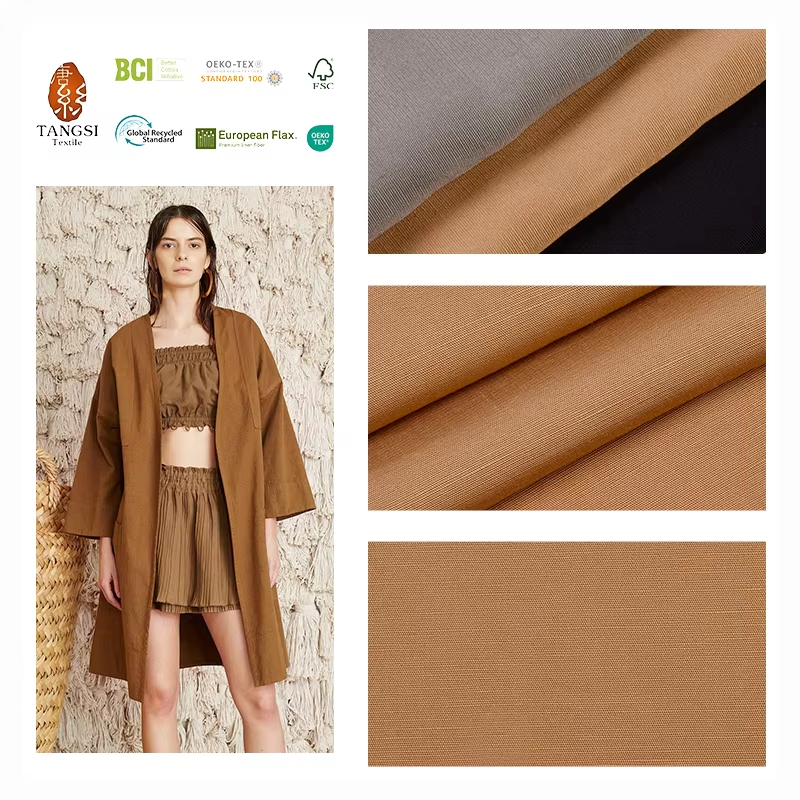
Performance sensorielle inégalée du tissu Tencel 100 %
Douceur et tombé : comment la structure nanofibrillaire du lyocell Tencel procure une sensation tactile haut de gamme
Qu'est-ce qui rend le tissu en Tencel à 100 % incroyablement doux ? Sa structure en nanofibrilles ! Ces fibres ultrafines sont en effet environ 500 fois plus fines que les fils de coton classiques, ce qui confère cette sensation lisse et presque soyeuse que nous apprécions tous. En ce qui concerne la façon dont les tissus retombent et se déplacent, le Tencel excelle également. Des essais montrent que, lorsqu’il est drapé sur des surfaces, le Tencel s’écoule mieux que le coton d’environ 40 %, grâce à l’alignement optimal de ces minuscules fibrilles. Et voici un avantage que le coton ne peut pas égaler : après plusieurs lavages, le Tencel conserve son toucher luxueux sans former de bouloches ni devenir rigide, contrairement à de nombreux tissus synthétiques. C’est pourquoi de nombreux designers d’intérieur choisissent le Tencel pour leurs projets : ils savent que les rideaux confectionnés dans ce tissu retomberont magnifiquement, et que les housses de meubles épouseront naturellement la forme des chaises sans paraître volumineuses ni donner une impression de qualité médiocre.
Capacité d’absorption de l’humidité et respirabilité : données d’essai ASTM D737/ISO 9237 pour la literie et les tissus d’ameublement haut de gamme
Le tissu Tencel peut absorber deux fois plus d'humidité que le coton classique, selon des essais réalisés conformément aux normes ASTM D737 et ISO 9237 relatives à la perméabilité à l'air. Ce qui explique son efficacité remarquable, c'est sa structure nanoporuse unique, qui éloigne la transpiration de la peau presque instantanément. Des recherches sur la régulation thermique ont révélé que les draps en Tencel réduisent les sueurs nocturnes d’environ deux tiers par rapport à d’autres matériaux. En matière de respirabilité, le Tencel surpasse le lin d’environ un quart, ce qui permet de conserver un confort optimal, qu’il fasse un froid glacial ou une chaleur accablante à l’extérieur. Les propriétaires d’hôtels qui équipent leurs meubles avec des tissus à base de Tencel observent également un phénomène intéressant : ce matériau résiste à la prolifération des moisissures et des bactéries, car il reste plus longtemps sec, et ne se déforme pas lorsqu’il est exposé, dans le temps, à des variations d’humidité. Cela contribue à préserver l’apparence et le toucher des ameublements coûteux, même après des années d’utilisation intensive.
Durabilité éprouvée et entretien pratique pour les tissus en Tencel 100 % dans les environnements résidentiels et hôteliers
Résistance à la traction, résistance au boulochage et longévité au lavage comparées à celles du coton et du modal
Les essais montrent que les tissus en Tencel 100 % surpassent à la fois le coton et le modal en termes de tenue structurelle. Selon les Rapports sur les performances textiles 2024, très médiatisés, les fibres de lyocell présentent une résistance à la traction environ 25 % supérieure lorsqu’elles sont humides. Pour les hôtels et les établissements où les draps sont lavés en continu, ce matériau conserve une résistance au boulochage d’environ classe 4 à 5 sur l’échelle ISO 12945-2, même après plus de 50 cycles de lavage. Cela signifie que ces tissus ont une durée de vie nettement supérieure à la normale. Et comme ils doivent être remplacés moins fréquemment, les entreprises peuvent réaliser des économies d’environ 40 % sur les coûts liés aux tissus par rapport aux matériaux conventionnels dans les zones à usage intensif.
Conseils d’entretien : lavage à froid, séchage en machine à basse température, pas d’eau de Javel chlorée — optimisé pour préserver l’intégrité à long terme des fibres
Des protocoles de soin fondés sur des données scientifiques préservent l’intégrité des fibres et maximisent leur longévité :
- Lavage à froid (30 °C / 86 °F) maintient l’alignement des nano-fibrilles tout en éliminant 98 % des contaminants en surface
- Séchage à basse température (< 60 °C / 140 °F) empêche la dégradation polymère qui conduit à la fragilité
- Pas d’eau de Javel chlorée , qui provoque des dommages oxydatifs aux chaînes de cellulose
Le respect de ces étapes réduit la fatigue des fibres de 70 % par rapport aux routines conventionnelles. Associé à sa structure naturelle régulant l’humidité, le tissu 100 % Tencel résiste à l’accumulation d’odeurs — réduisant ainsi la fréquence de nettoyage de 30 % dans un usage résidentiel, tout en répondant aux normes hygiéniques les plus strictes dans le secteur de l’hôtellerie.
Précision du design : choisir le bon grammage, le bon tissage et la bonne structure pour le tissu 100 % Tencel
Recommandations de grammage (g/m²) et de tissage selon l’application : housses de couette (180–220 g/m²), rideaux (240–280 g/m²), revêtements d’ameublement (300+ g/m²)
L'optimisation du grammage au mètre carré (GSM) et de la structure du tissage garantit des performances maximales dans les applications haut de gamme. Pour les housses de couette de luxe, les tissages satinés de 180 à 220 GSM offrent un équilibre idéal : suffisamment serrés pour résister à l’effilochage après de multiples lavages, tout en restant suffisamment respirants pour assurer une régulation thermique optimale pendant le sommeil.
Pour les rideaux, les tissages armure décalée ou en arête de poisson, de 240 à 280 GSM, assurent une opacité filtrante de la lumière sans compromettre la fonction d’évacuation de l’humidité, tout en offrant une meilleure stabilité dimensionnelle face à une exposition prolongée aux rayons UV.
L’ameublement exige des constructions robustes de 300 GSM et plus, où les tissages toile ou jacquard excellent : les motifs entrelacés du jacquard masquent l’usure dans les environnements hôteliers à fort trafic, tandis que la toile renforce la résistance à la traction afin de supporter plus de 20 000 frottements doubles (norme ASTM D4157).
| Application | GSM optimal | Tissages recommandés | Avantage clé en matière de performance |
|---|---|---|---|
| Housse de duvet | 180–220 | Satin | Régulation thermique + résistance à l’effilochage |
| Rideaux | 240–280 | TWILL, Herringbone | Résistance aux UV + retombée structurée |
| Tapisserie | 300+ | Toile, Jacquard | Résistance à l’abrasion + capacité portante |
Appariement précis du GSM et du tissage — satiné pour le confort en literie, jacquard pour la dissimulation des taches sur les canapés — empêche la dégradation prématurée des fibres et prolonge la durée de vie des textiles de 40 %.
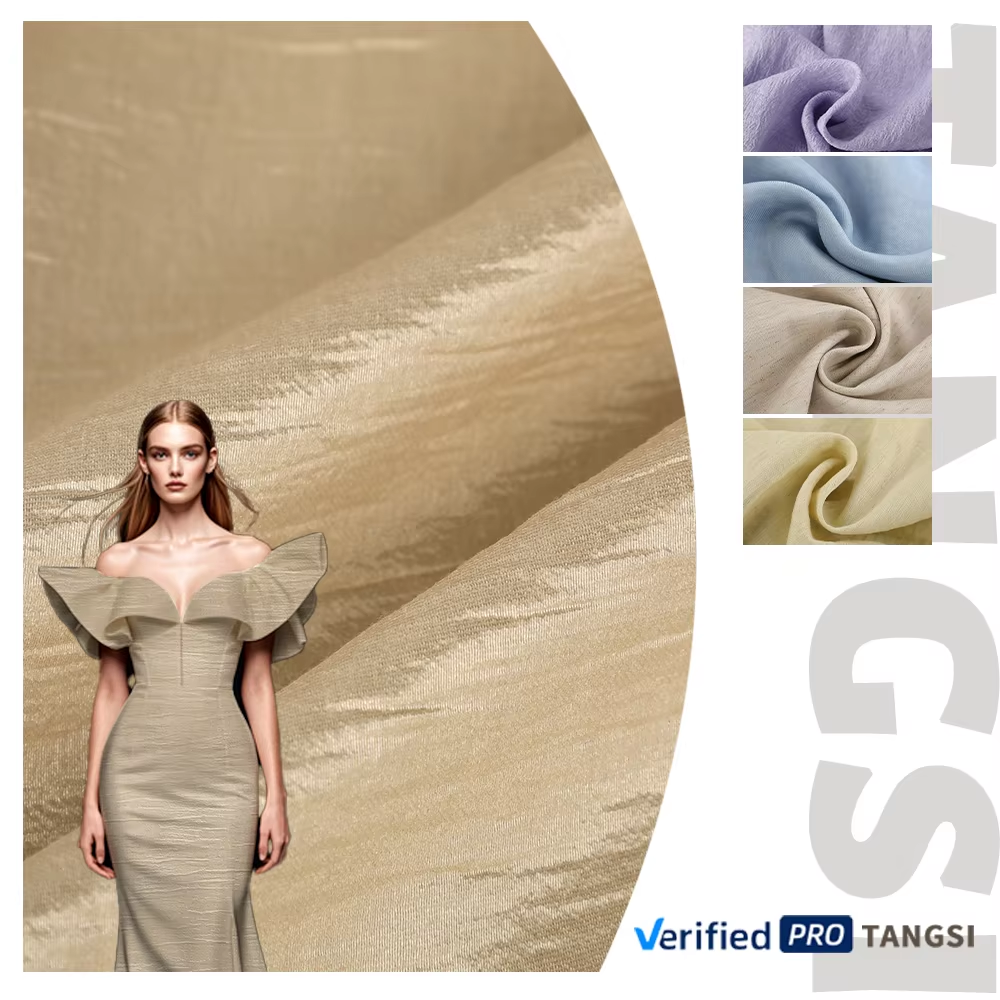
La durabilité comme avantage stratégique : l’intégrité du circuit fermé du tissu Tencel 100 %
Approvisionnement en eucalyptus, récupération du solvant (> 99 %) et comparaisons d’analyses du cycle de vie (ACV) avec la viscose conventionnelle et le polyester
Le tissu Tencel est issu d'eucalyptus cultivés dans des forêts bénéficiant de certifications de durabilité. Ces arbres ne nécessitent ni eau supplémentaire, ni produits chimiques, ni terres agricoles spécifiques pour pousser correctement. La fabrication du Tencel repose sur un système à boucle fermée permettant de récupérer environ 99 % des solvants utilisés, qui ne sont pas du tout toxiques. Ce procédé élimine les émissions nocives de disulfure de carbone généralement produites par la fabrication classique de viscose. Des études portant sur l’ensemble du cycle de vie révèlent également un résultat remarquable : le Tencel consomme environ la moitié de l’énergie requise par le polyester et génère trente pour cent moins de gaz à effet de serre au total. En outre, lorsqu’il arrive au terme de son utilisation, le Tencel se dégrade intégralement dans le sol en seulement douze mois — une différence frappante avec les articles en polyester, qui mettent plus de deux cents ans à se décomposer naturellement.
Principaux avantages environnementaux :
- Efficacité énergétique de l'eau consommation réduite de 95 % par rapport à la culture du coton
- Réduction de la toxicité : Remplace le disulfure de carbone dangereux par un oxyde d’amine sûr
- Circularité : Entièrement compostable sans libération de microplastiques
Ce profil rigoureusement validé transforme la durabilité d’un simple argument marketing en un avantage concurrentiel mesurable — en particulier pour les marques de textiles d’intérieur visant des certifications tierces telles que l’Ecolabel de l’UE ou le GOTS.
Table des matières
- Performance sensorielle inégalée du tissu Tencel 100 %
- Durabilité éprouvée et entretien pratique pour les tissus en Tencel 100 % dans les environnements résidentiels et hôteliers
- Précision du design : choisir le bon grammage, le bon tissage et la bonne structure pour le tissu 100 % Tencel
- La durabilité comme avantage stratégique : l’intégrité du circuit fermé du tissu Tencel 100 %