
 EN
EN
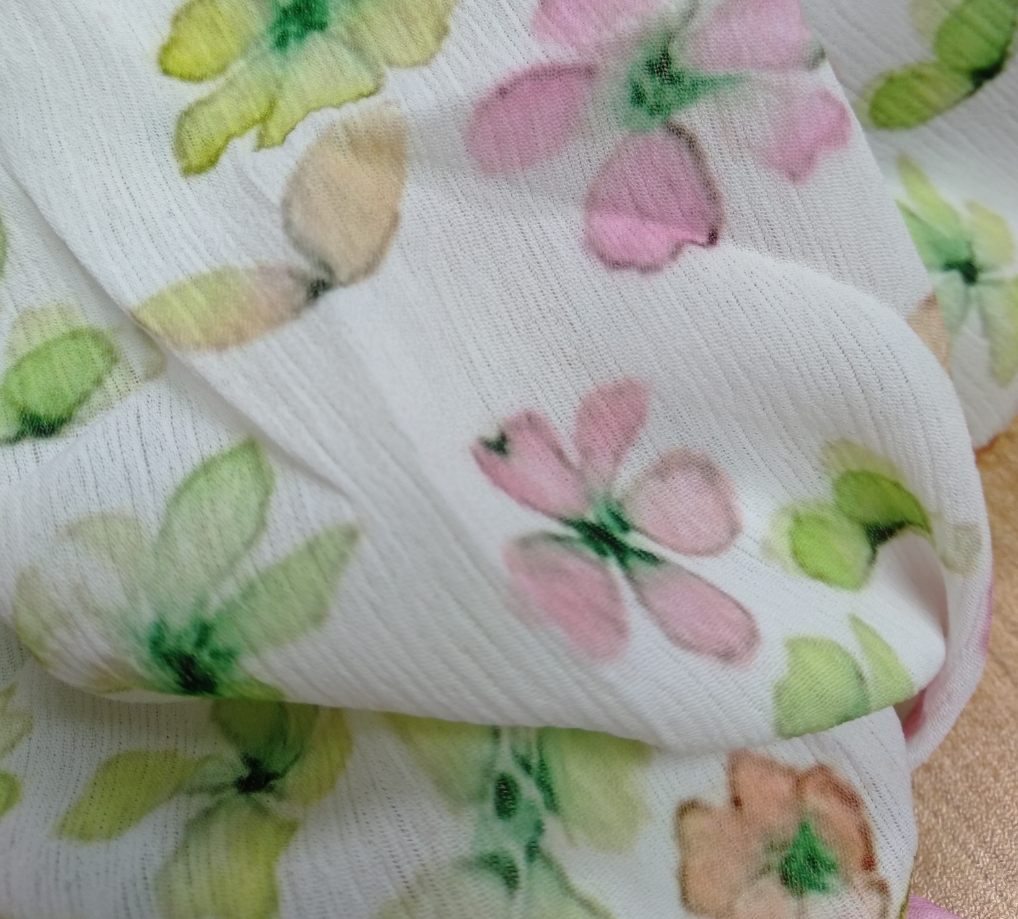
What Defines High-Performance Printed Dress Fabric?
A high-performance printed dress fabric must balance aesthetic appeal with functional wearability. Unlike decorative fabrics meant solely for display, a dress fabric must move with the body, hold its shape, and maintain print integrity after repeated wear and care. The defining qualities begin with four core properties: drape, stretch, breathability, and print adhesion. Drape determines how the fabric falls—soft, fluid materials like viscose create graceful folds, while stiffer fabrics support structured silhouettes. Stretch, typically from elastane or mechanical knit construction, allows the garment to move without distortion—essential for fitted dresses. Breathability ensures comfort during extended wear by enabling air and moisture transfer. Finally, print adhesion ensures the design resists fading, cracking, or peeling over time—critical for dresses exposed to sweat, dry cleaning, or regular laundering.
Key fabric properties—drape, stretch, breathability, and print adhesion—for dress-specific wearability
Each property plays a distinct role in garment performance. Drape influences how the printed pattern visually conforms to the body: a high-twist rayon flows elegantly, while cotton poplin stands away from the skin. Stretch—whether from spandex blends or knit structure—provides recovery after movement, preventing bagging at elbows or hips. Breathability directly affects seasonal comfort; natural fibers like linen and cotton support airflow in summer styles, while winter-weight jerseys may prioritize thermal retention without sacrificing mobility. Print adhesion is the final frontier: heat-set dyes or pigment binders must lock into fibers without stiffening the hand feel, preserving both vibrancy and softness. A failure in any one area—cracking from poor adhesion or pattern distortion from excessive stretch—can compromise wearability.
How fiber composition (cotton, rayon, Tencel, polyester blends) impacts print vibrancy and garment behavior
The base fiber dictates both visual fidelity and functional behavior. Cotton absorbs ink deeply, yielding soft, matte prints with rich color depth—but requires preshrinking before printing to prevent post-construction shrinkage. Rayon’s smooth, semi-synthetic surface enhances ink penetration, producing exceptionally vivid, saturated prints with fluid drape—ideal for bold tropical or floral designs. Tencel (lyocell) matches rayon’s vibrancy while offering superior moisture management and lower environmental impact, making it a preferred choice for sustainable dress collections. Polyester excels in print permanence: sublimation and dispersion dyeing bond pigments directly into the fiber, delivering high-fastness results that resist fading through frequent washing. However, its low moisture regain can limit breathability—so performance-oriented dress fabrics often blend polyester with cotton or rayon to harmonize durability with comfort. Ultimately, fiber selection balances aesthetic goals with functional intent: a flowing midi dress demands drape-friendly flexibility, while a structured bodycon style relies on polyester blends for shape retention.
Pattern Design Fundamentals for Printed Dress Fabric
The visual impact of any garment begins with the pattern design on its printed dress fabric. Two foundational elements—repeat type and motif scale—determine how a print aligns at seams and flatters the silhouette. A well-chosen repeat prevents mismatched cut lines, while the correct scale ensures the design complements the garment’s volume and intended wear.
Repeat types—full drop, half drop, mirror, and half-brick—and their effect on seam alignment and visual flow in dresses
Repeat types define how a pattern tiles across the fabric and where seams fall. A full drop (block repeat) aligns motifs in a straight grid—ideal for geometric prints and straightforward panel cutting. The half drop, which shifts every other row by 50%, creates a staggered rhythm that effectively conceals seam lines in A-line and flared silhouettes. Mirror repeats reflect the design at each edge, generating symmetry ideal for center-front seams and bodices. Half-brick repeats, which offset columns rather than rows, suit abstract or tile-like motifs. Choosing the wrong repeat can cause visible breaks at side seams or disrupt visual continuity—especially noticeable on large back panels or long princess seams.
Scale considerations: small florals for sheaths vs. large motifs for A-lines and maxi dresses
Motif scale must align with silhouette and proportion. Small-scale prints—florals, micro-geometrics, or polka dots under two inches—work best for sheath, shift, and fitted bodices. They distribute evenly across curves, avoid visual distortion, and tolerate minor seam misalignment. Large-scale motifs—florals, paisleys, or abstract shapes over six inches—require generous surface area to read cohesively; A-line, trapeze, and maxi dresses provide this space. On a sheath dress, oversized motifs risk being truncated and disjointed; on a voluminous skirt, they generate dramatic, immersive impact. Designers should also consider vertical repeat length: a 24-inch repeat may be inefficient for short dresses but adds elegance and continuity to floor-length gowns.
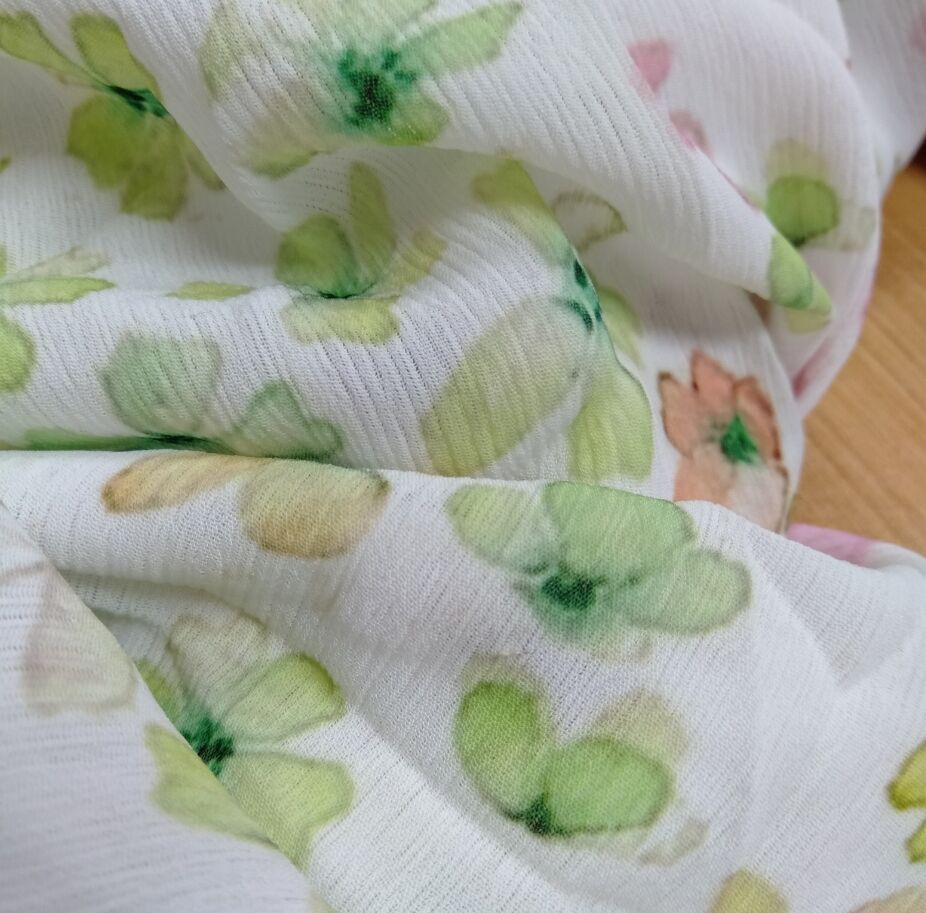
Digital vs. Traditional Printing: Choosing the Right Method for Printed Dress Fabric
Digital printing advantages: unlimited color palettes, micro-pattern precision, and low-MOQ customization
Digital printing transfers designs directly from digital files onto fabric using inkjet technology—eliminating the need for screens or plates. It delivers unlimited color palettes, seamless gradients, and micro-pattern precision, making it ideal for photo-realistic details and complex tonal transitions. For printed dress fabric, it enables rapid prototyping, low minimum order quantities (MOQ), and cost-effective sampling—supporting agile design development and small-batch collections without setup penalties.
Screen printing trade-offs: cost efficiency at scale, tactile ink depth, and limitations with complex gradients
Screen printing uses stencils and thick, opaque inks to build vibrant, textured layers with strong coverage. Its per-unit cost drops significantly at higher volumes, making it highly efficient for large production runs. The tactile quality of screen-printed ink also adds dimensionality to bold, graphic prints. However, it struggles with fine detail, subtle gradients, and multi-layered color blending. Setup time and expense further limit flexibility—making it less viable for evolving designs or limited-edition releases.